Introduction
Virtual reality is one of the most exciting emerging technologies today, transforming how we experience digital content. We’re about to dive headfirst into the world of VR, where the line between reality and digital illusion is thinner than my patience for buffering videos.
If you’re not immersing yourself in this digital wonderland, are you even living in the 21st century? Let’s break the illusion of reality and dig deeper into the matrix. This technology is a key part of the broader technology and society transformation.
1. Unveiling the Matrix: Understanding Virtual Reality
Imagine strapping a thingamajig to your face, and suddenly you’re off slaying dragons or shaking hands with the Dalai Lama. That’s what VR is about.
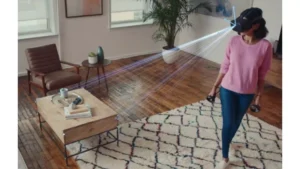
The tech behind this illusion is complex. Inside your VR headset are algorithms and sensors that track your every move and render a 3D world in real-time. It’s not just a screen strapped to your face — it’s a complete sensory immersion system.
2. The Road So Far: A Brief History of Virtual Reality
VR isn’t new. The first head-mounted display was created in 1968 by Ivan Sutherland. But it took decades of miniaturization, better displays, and powerful GPUs to make VR viable for consumers.
The 2010s saw the Oculus Rift kickstart the modern VR era. Today, standalone headsets like the Meta Quest have made VR accessible to millions without needing a powerful PC. This evolution is part of the broader virtualization world of entertainment.
3. Pros and Cons of Immersing in Virtual Reality
The Upsides
- Immersive learning — Medical students practice surgery, pilots train in flight simulators
- Empathy building — Experience life from another person’s perspective
- Boundless entertainment — Gaming, virtual travel, and interactive stories
- Therapeutic applications — PTSD treatment, phobia exposure therapy
The Downsides
- Motion sickness — A mismatch between visual and physical movement
- High cost — Quality headsets and content still pricey
- Isolation — VR can be a solitary experience
- Eye strain and fatigue — Extended sessions can be physically taxing
4. A Glimpse into the Future: Emerging VR Technologies
The future of VR is bright. Emerging trends include haptic feedback suits that let you feel virtual objects, eye-tracking for more natural interaction, and mixed reality that blends digital and physical worlds — also known as spatial computing.
As the technology becomes more affordable and accessible, VR will transform education, healthcare, remote work, and social connection in ways we’re only beginning to imagine.
Conclusion
Virtual Reality is an incredible emerging technology that offers experiences impossible in the physical world. But like any powerful tool, it requires mindful use. Embrace the immersion, but don’t forget to take off the headset and enjoy the real world too.

Mohamed Ibrahim explores how technology reshapes human behavior, relationships, and society at Tech’s Impact: Rewiring Society and Concepts. His research-backed writing helps readers navigate the digital age without losing what matters most.