Introduction
Spatial computing is revolutionizing how we interact with digital content by merging AR, VR, and AI directly into our physical surroundings. This cutting-edge technology is transforming industries like healthcare, education, and retail, unlocking immersive experiences and unprecedented efficiencies. It builds on advances in virtual reality and ambient invisible intelligence.
Key Technologies Driving Spatial Computing
- Augmented Reality (AR): Superimposes digital objects onto the physical world
- Virtual Reality (VR): Immerses users in fully digital environments
- Mixed Reality (MR): Blends physical and digital elements interactively
- Artificial Intelligence (AI): Powers decision-making, object recognition, and data analytics
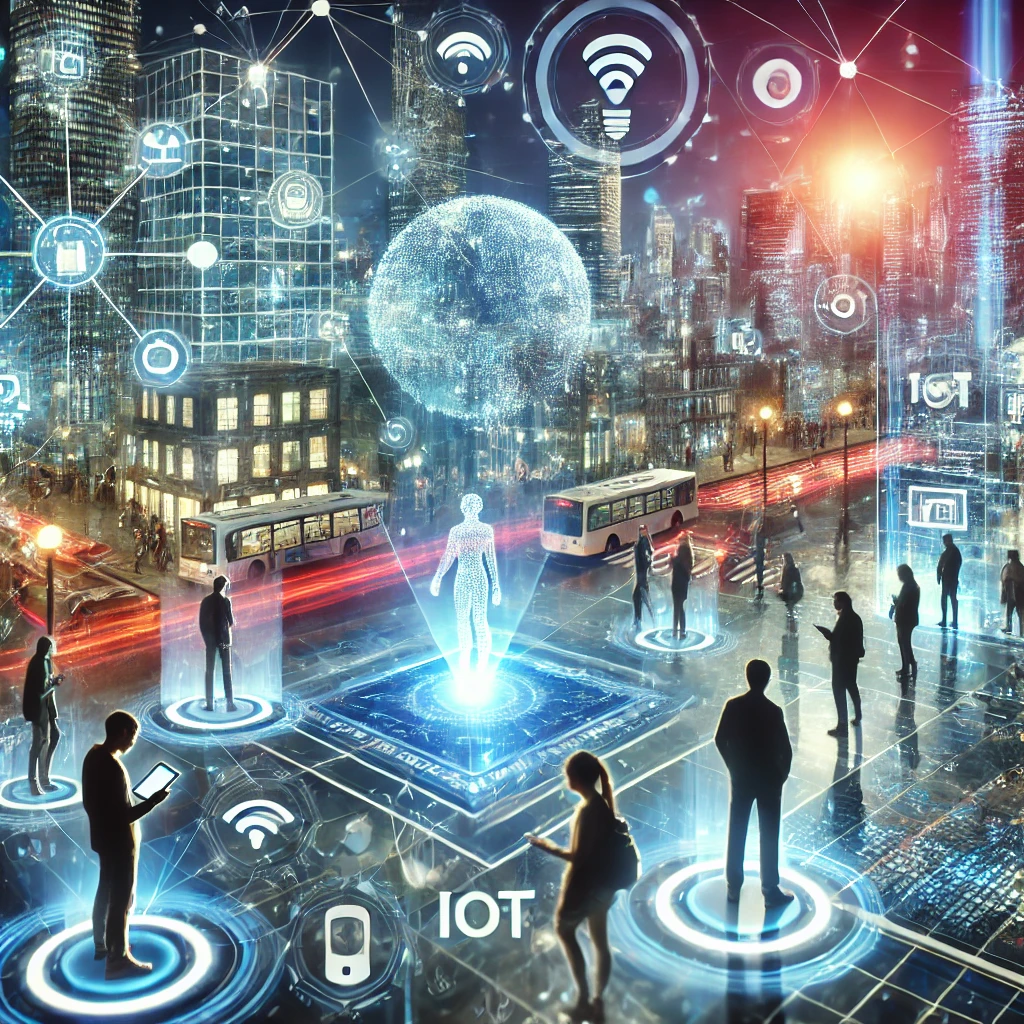
- Internet of Things (IoT): Connects physical devices to digital systems
1. Applications of Spatial Computing
Healthcare
Surgical Assistance: AR and VR tools assist surgeons by overlaying 3D visualizations of anatomy during operations, improving precision and reducing risks.
Medical Training: Students practice procedures in VR without risk to real patients.
Patient Education: Patients can visualize their conditions and treatments through AR.
Education
Virtual classrooms allow students to explore historical sites, the human body, or distant planets. Interactive 3D models make abstract concepts tangible. Students learn by doing — not just reading.
Retail
Customers can try on clothes virtually, see furniture in their home before buying, or visualize products in 3D. Spatial computing bridges the gap between online and in-store shopping experiences.
Manufacturing and Design
Engineers use AR to overlay assembly instructions onto real equipment. Architects walk through digital building models. Design, prototyping, and maintenance become faster and more intuitive.
Conclusion
Spatial computing is not just the next interface — it’s the disappearance of the interface. As AR glasses, VR headsets, and AI converge, the boundary between digital and physical will continue to blur, creating experiences that feel more natural and human than ever before.

Mohamed Ibrahim explores how technology reshapes human behavior, relationships, and society at Tech’s Impact: Rewiring Society and Concepts. His research-backed writing helps readers navigate the digital age without losing what matters most.


