Introduction
Two years ago, smart glasses felt like a solution looking for a problem. Today, on-device AI has changed the game entirely.
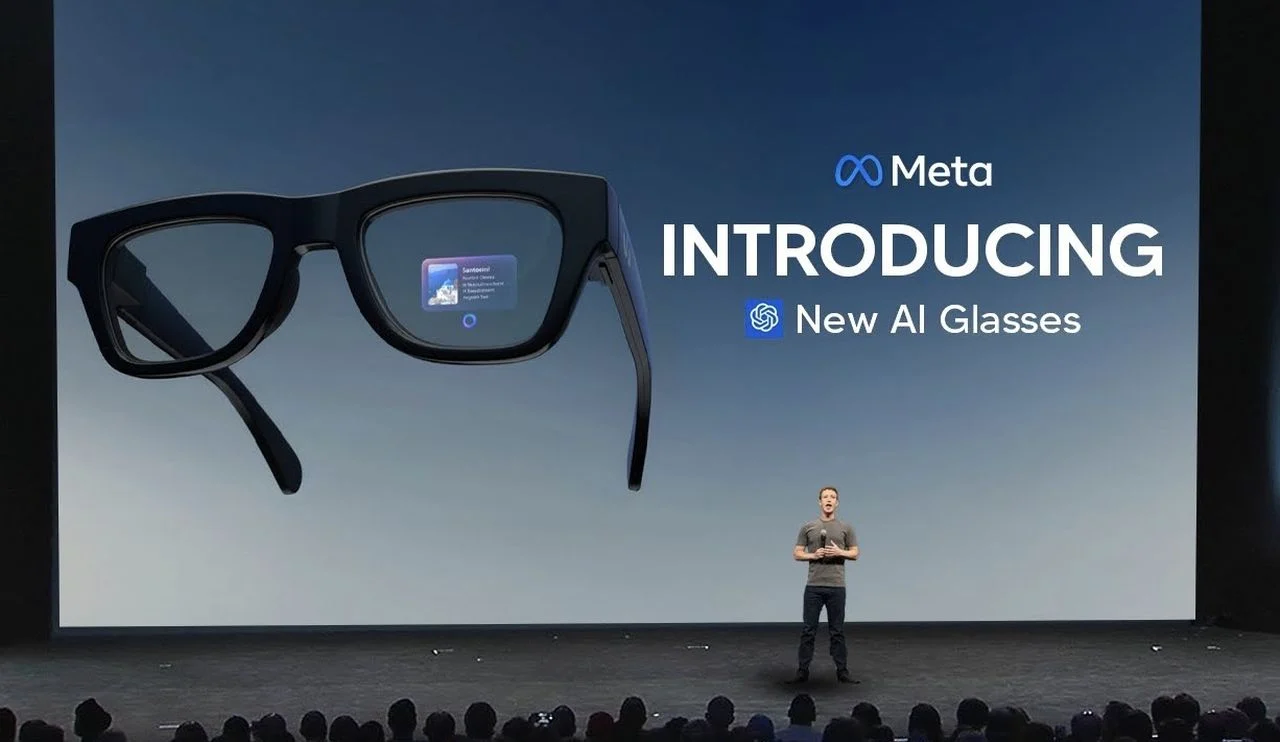
The latest AI glasses 2026 models can translate conversations in real-time, identify landmarks by voice, and even remember where you parked — all without pulling out your phone.
According to Grand View Research, the global smart glasses market is projected to reach $46.5 billion by 2032, up from $8.1 billion in 2025 — a compound annual growth rate of 24.5%. That growth is fueled by on-device AI, tiny displays, and a wave of new products hitting the market in 2026.
The Meta Ray-Ban (2026 edition) remains the comfortable, stylish benchmark. But the competition has caught up fast.
The Samsung Glasses 2 and Xiaomi Smart Glasses 3 now offer built-in micro-displays, while the Google Gemini Pro glasses focus on contextual “ambient computing.”
Which one should you buy? Let’s break it down.
How We Tested
We evaluated each pair of AI glasses over a two-week period across five core criteria:
- Comfort — fit, weight distribution, and all-day wearability
- AI responsiveness — speed and accuracy of voice queries and visual recognition
- Battery life — real-world usage including music, AR, and standby
- Display quality — brightness, color accuracy, and readability in sunlight
- Camera performance — photo sharpness, video stabilization, and low-light capability
Each model was tested with the same set of tasks — navigation, photo capture, AI queries, and translation — on both iOS and Android where available. Pricing reflects manufacturer MSRP as of April 2026. Industry shipment data sourced from IDC’s Wearables Market Monitor (Q1 2026).
1- Head-to-Head Specs Comparison (2026)
| Feature | Meta Ray-Ban (Gen 3) | Samsung Glasses 2 | Xiaomi Mijia Glasses 3 | Google Gemini Pro |
|---|---|---|---|---|
| Display | None (Audio/AI only) | Micro-LED (Green monochrome) | Micro-OLED (Full color) | Waveguide (Color) |
| Camera | 16MP Ultra-wide (4K video) | 8MP (1080p only) | 12MP (Hybrid zoom) | 2MP (VGA for QR only) |
| On-Device AI | Llama 4 (Text only) | Bixby + Gauss (Live Text) | AI Hub (Visual search) | Gemini Nano 2 (Full multimodal) |
| Battery Life | 8 hrs (4 hrs w/ music) | 10 hrs (2 hrs w/ AR) | 6 hrs (3 hrs w/ AR) | 12 hrs (No AR mode) |
| Weight | 48g (Lightest) | 68g | 62g | 55g |
| Price | $329 | $649 | $499 | $399 |
2- Meta Ray-Ban: The “Invisible” AI Assistant
The 2026 Meta Ray-Ban is not trying to be augmented reality. It is trying to be the perfect smart companion — stylish, discreet, and always listening when you need it.
Pros
- Stealth Design: They look exactly like standard Wayfarers. There is no “tech glow” or bulky temples.
- Best Camera: The 16MP sensor shoots surprisingly stable 4K video for social media.
- Live AI: With Llama 4, you can ask, “Hey Meta, look at this tool and tell me how to change a valve,” and it will answer in real-time via the open-ear speakers.
- Battery Case: The included glasses case charges them to full three times.
Cons
- No Heads-Up Display (HUD): You cannot see navigation arrows or notifications. You only hear them.
- Privacy LED: The recording light is mandatory and flashes brightly (a pro for privacy, a con for discretion).
The Verdict
Best for creators and commuters who want notifications and capture without looking like a cyborg.
3- The Competition: Display Wars
If you want information floating in your peripheral vision, 2026 is your year. The competition has finally solved the brightness and eye-strain issues that plagued earlier models.
a- Samsung Glasses 2 (The Productivity Tool)
Samsung partnered with Qualcomm to shrink a Micro-LED projector into the right temple. The Samsung Glasses 2 project a tiny green HUD that shows navigation arrows, live transcripts of conversations, and SMS messages.
Edge: Excellent sync with Galaxy phones and seamless Google Maps integration.
Downside: The monochrome green display feels retro compared to color options. At $649, they are pricey for limited color.
b- Xiaomi Mijia Glasses 3 (The Luxury AR)
Xiaomi surprised everyone by launching a full-color Micro-OLED display that does not drain the battery in an hour. These glasses can overlay translated text onto real-world objects — signs, menus, and more.
The Mijia Glasses 3 are the only ones in this list that support basic 3D AR objects, like following a GPS arrow that sits on the actual road.
Edge: Best display quality under $500 — true color AR at a fraction of the cost of HoloLens.
Downside: Software support outside China is spotty. Do not buy these if you rely heavily on Google Services.
c- Google Gemini Pro (The Context King)
The Google Gemini Pro glasses took a different approach. Their camera is low-res and the speaker is average. Their magic is multimodal AI.
Unlike Meta, which requires you to say “Look,” Gemini is always passively analyzing what you see (via a privacy shutter you toggle). If you look at a landmark, it proactively whispers history. If you look at a PDF, it summarizes it. It has a small waveguide display for quiet notifications, but Google wants you to interact via voice.
Edge: Best AI latency and contextual awareness of any smart glasses in 2026.
Downside: The 2MP camera is terrible for photos, so you cannot use them as a vlogging tool.
4- Which Should You Buy in 2026?
Your choice comes down to how you use your eyes vs. your ears.
Buy the Meta Ray-Ban if:
- You wear regular glasses for style first. Meta Ray-Ban are the only “fashion brand” glasses on this list.
- You need a hands-free camera for Instagram, TikTok, or dashcam-style recording.
- You dislike light flickering in your vision. If AR gives you a headache, stick with Meta’s pure audio/AI model.
- Your budget is under $400.
Buy the Samsung Glasses 2 if:
- You are a heavy Google Maps user who hates looking at a phone while cycling or walking.
- You need discrete translation — hearing the translation while reading text on the display is powerful.
- You own a Samsung Galaxy S25 or Z Fold 6.
Buy the Xiaomi Glasses 3 if:
- You want the true “future” experience (full color AR) but cannot afford $1,000+ HoloLens or Apple Vision Pro.
- You primarily need menu translation while traveling abroad.
Buy the Google Gemini Pro if:
- You want the smartest assistant. Gemini Nano 2 crushes Llama 4 in logical reasoning tests.
- You do not record video selfies.
- You want a device that works equally well with iOS and Android — unlike Samsung’s lock-in.
Conclusion
In 2026, there is no single “best” AI smart glasses — only the best fit for your lifestyle.
Meta Ray-Ban remains the safest recommendation for the average person. They represent the latest in the tech and smart life revolution. They are light (48g), affordable ($329), and do not demand you learn a new UI. You simply talk to Meta and move on. They are the iPod of smart glasses.
But if you are an early adopter who believes the future is visual, the Xiaomi Mijia Glasses 3 offer the most impressive color display for the price.
Samsung wins for productivity, and Google Gemini Pro is the thinker’s choice — though a weak camera holds it back.
FAQs
1- Can AI glasses record people without their knowledge?
In 2026, most reputable brands (including Meta and enterprise options like RealWear) include a visible recording LED that cannot be disabled by software. Solos and Brilliant Labs have optional LEDs. Always respect local privacy laws.
2- Do any AI glasses work without a smartphone?
No. All models in this comparison require a companion app (iOS/Android) for initial setup, firmware updates, and cloud AI features. Enterprise devices like RealWear can run core tasks offline but still need mobile or IT management for configuration.
3- Which AI glasses have the best battery for all-day use?
RealWear Navigator 520 leads for shift work thanks to hot-swappable batteries (8–10h each). Among consumer models, the Solos AirGo Vision and Meta Ray-Ban last a workday with help from their charging cases.
4- Can I get prescription lenses in smart glasses?
Yes. Meta Ray-Ban (via Luxottica) and Solos offer direct prescription ordering. Xiaomi (select markets) supports Rx via partners. Brilliant Labs typically requires clip-on or third-party inserts.
5- Are cheap AI glasses worth it?
The sub-$250 tier is tempting, but software bugs and limited AI support can be frustrating. Spend at least $300 for a reliable AI glasses 2026 experience. The Brilliant Labs Frame at around $349 is an exception if you do not need top-tier camera quality.
6- Will these glasses work with iPhone and Android equally?
Meta Ray-Ban and Solos have near-identical features on both platforms. Enterprise devices like RealWear integrate best with managed Android fleets. Xiaomi’s best features are locked to the Mi Ecosystem on Android.

Mohamed Ibrahim explores how technology reshapes human behavior, relationships, and society at Tech’s Impact: Rewiring Society and Concepts. His research-backed writing helps readers navigate the digital age without losing what matters most.


