Introduction
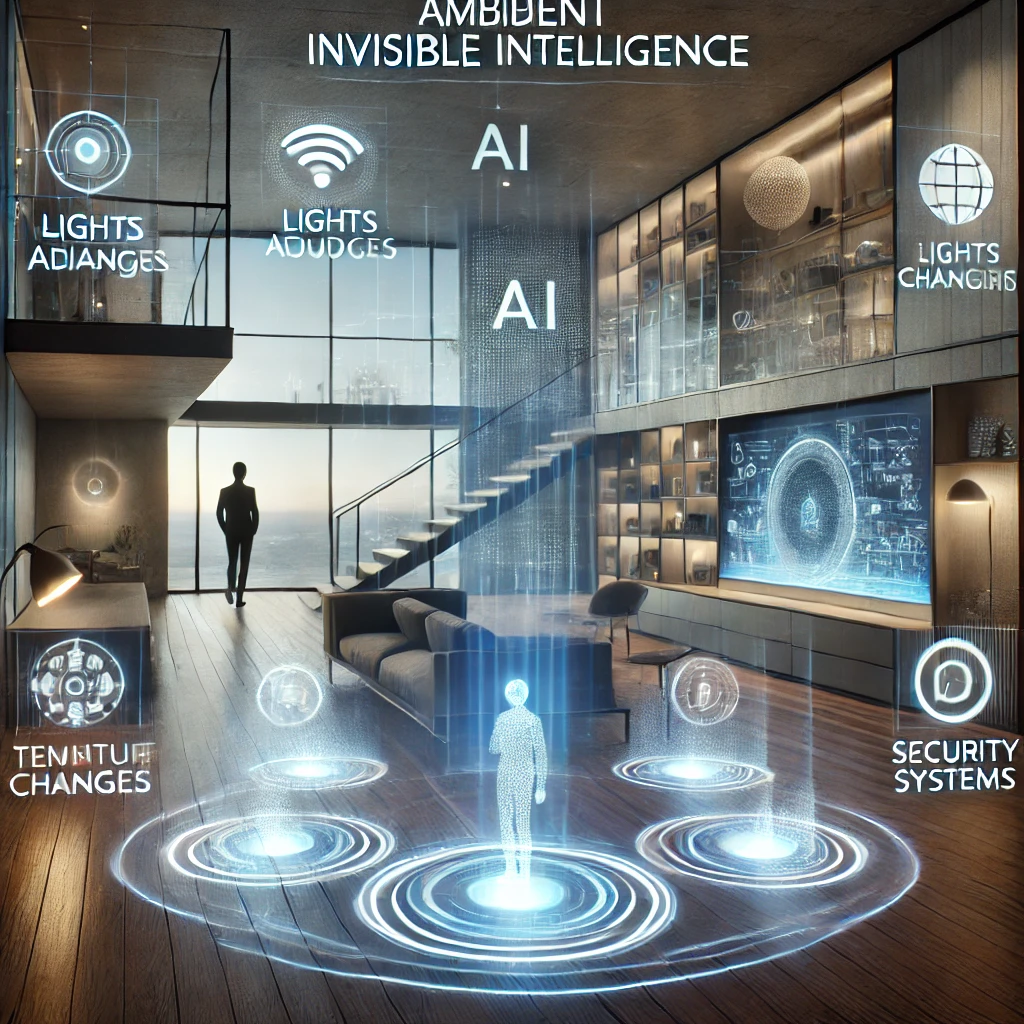
Ambient Invisible Intelligence (AII) refers to technology that integrates seamlessly into our environments, responding intuitively to human needs without requiring conscious interaction. This technology includes smart home devices, wearables, and systems that learn user preferences to enhance daily living experiences.
1. What Is Ambient Invisible Intelligence?
AII refers to the integration of AI-powered smart systems that operate seamlessly in the background. These systems leverage sensors, machine learning, and automation to enhance user experiences without requiring you to interact with visible interfaces or devices.
Think of a room that adjusts its temperature, lighting, and music based on who enters and what they’re doing — without a single voice command or tap on a screen.
2. Core Components of AII
- Sensors: Motion, temperature, light, sound, and presence sensors detect environmental conditions
- Machine learning: Algorithms learn patterns and preferences over time
- Connectivity: Devices communicate through IoT networks
- Automation: Systems act without human intervention
- Adaptive interfaces: Environments change based on context
3. Applications in Everyday Life
Smart homes: Lights, thermostats, and appliances that respond to your presence and habits — automatically. No voice commands needed. The home learns your rhythm.
Wearables: Health monitors that detect anomalies and alert your doctor before you feel symptoms.
Smart cities: Traffic lights that adjust to real-time congestion, waste bins that signal when full, and street lights that dim when no one is around.
Retail: Stores that detect when you need assistance and send a staff member — without you pressing a button.
4. Privacy and Ethical Considerations
With great invisibility comes great responsibility. Constant sensing raises privacy concerns: who owns the data? Is it stored securely? Can it be used against you?
The key principles for responsible AII include transparency (users should know what’s being sensed), control (opt-in, not opt-out), and data minimization (collect only what’s needed).
Conclusion
Ambient Invisible Intelligence represents the next frontier of human-computer interaction. It builds on spatial computing to create seamless digital experiences. The best technology is the one you don’t notice — because it works so well that it fades into the background, letting you focus on what truly matters.

Mohamed Ibrahim explores how technology reshapes human behavior, relationships, and society at Tech’s Impact: Rewiring Society and Concepts. His research-backed writing helps readers navigate the digital age without losing what matters most.


